Guide
How to Start Investing With $100
You do not need thousands to begin. $100 - or even less - is enough to learn the habits that build real wealth.
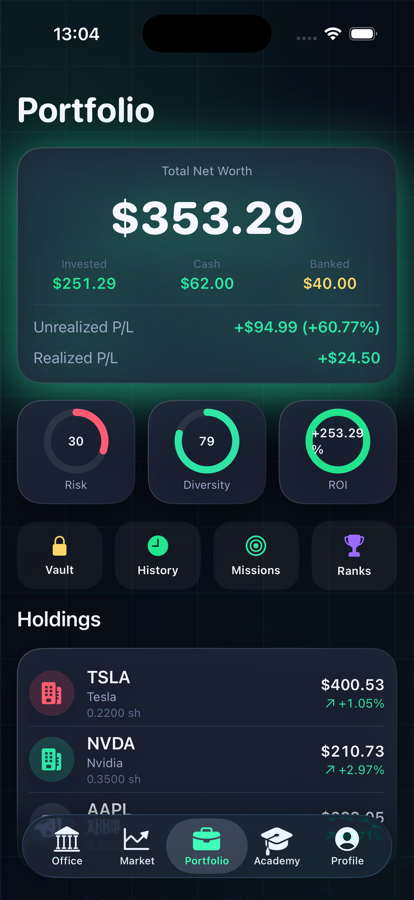
The biggest myth in investing is that you need a lot of money to start. Thanks to fractional shares, $100 can buy a slice of Apple, an S&P 500 ETF, and a little Bitcoin all at once. What matters far more than the amount is starting and staying consistent - the investor who puts in $100 a month for years almost always beats the one who waits until they have "enough" to begin. Small and early beats big and late, because compounding rewards time more than size.
Step 1 - Decide your goal
Growing long-term wealth? Learning the basics? Just curious? Your goal sets your risk. If you are investing for a decade or more, you can hold steadier through the dips and lean on index funds; if you just want to learn the mechanics, keep your positions tiny so a mistake costs you nothing but a lesson. Beginners usually start with steady index funds and add a few growth picks on top.
Step 2 - Buy fractional shares
You don't need $200 for one Apple share - most brokers now let $5 buy a fraction of it. That single change is what makes starting with $100 realistic: instead of betting your whole balance on one expensive share, you spread it across 3-5 assets. Fractional investing means the price of a share never locks you out; you decide the dollar amount, and the broker gives you the matching slice.
Step 3 - Diversify
Diversification is the one free lunch in investing. Mix a broad ETF for instant diversification (hundreds of companies in one buy), one or two individual stocks you believe in, and maybe a small crypto position for upside. If one drops, the others cushion it. A simple, sensible way to split a first $100:
| Slice | Amount | Why |
|---|---|---|
| Broad ETF | $60 | Your stable, diversified core |
| 1-2 stocks | $30 | Companies you understand and believe in |
| Crypto | $10 | Small high-risk, high-upside slice |
Step 4 - Reinvest and stay calm
Reinvest gains and dividends so they compound - earning returns on your returns is what turns small sums into large ones over time. And when the market dips (because it will), don't panic sell. Selling at the bottom locks in a loss that would likely have recovered. Time in the market beats timing it: even professionals rarely call the exact top or bottom, so the winning move is usually to hold and keep adding.
Step 5 - Practice first (free)
Before risking real cash, practice with virtual money against real prices. Investor Arena gives you $100 of virtual cash to trade live-priced stocks, ETFs, gold and crypto, and its Academy lessons teach risk, diversification and compounding as you go - so you build the instincts risk-free. Make your beginner mistakes where they cost nothing, then bring the confidence to the real thing.
FAQ
Is $100 really enough to start investing? Yes. Fractional shares let you buy slices of expensive stocks and ETFs, so $100 can hold a diversified mix. Consistency matters far more than your starting amount.
What should I buy first with $100? Most beginners start with a broad ETF as the core, add one or two stocks they understand, and keep any crypto to a small slice.
How do I practice without losing money? Use a stock market simulator like Investor Arena - real prices, $100 of virtual cash, and lessons that teach as you play.
Play Investor Arena Free
Educational game & simulator. Not financial advice.
Related: How to learn the stock market without risking money · How to learn investing with no money · Best stock market simulator apps (2026) · Investing glossary.